The Uber Driver Ratings Theory of Happiness
It's been solved. We can pack up now.

In 2017, Uber had a problem: its drivers were not happy. There were many reasons for this, not least the CEO’s very public, video-recorded spat with an Uber driver… inside the driver’s own car.
But to improve driver satisfaction, we needed to understand exactly what drivers were upset about. I was working for Uber at the time and, as a side project, started a program in the Uber New York office called UberListen which gave employees free rides if they surveyed their driver and filled out a form. The goal was to collect meaningful qualitative data while building empathy for the driver experience.
The surveys went directly to me. Sifting through them, clear themes emerged: low pay, unreliable routing, rude riders. But I also noticed – in the data and in my own UberListen trips – that the most frustrated drivers had not only the lowest driver satisfaction but also the lowest driver rating (meaning how happy riders were with them).
Well, of course! your hole-poking brain might exclaim. If Uber underpaid the low-rated drivers and their apps didn’t work well, it would make it hard for them to do their jobs, leading to dissatisfied riders.
The catch, however, is that Uber’s challenges were mostly evenly distributed across drivers. The pay was the same – everyone got the same base rate + time/distance fees – and the dispatch algorithm was based on logic that prioritized proximity to the rider. App issues were common across every type of driver. And rude riders were the luck of the draw. So there must have been something else.
What I discovered is that there was a core difference between the highly-rated and the low-rated drivers: highly rated drivers just didn’t feel like the problems they faced were A Big Deal. I would often get into cars with them and start asking open-ended questions about what they don’t like about their experience and be met with a shrug or a dismissal of the question.
I saw this in the survey responses too. It was actually harder to get negative or constructive feedback out of them… like it’s not something that existed at the surface level of their consciousness.
They would get there, after some prodding, and still often start by sharing what they did like. A typical answer from a highly rated driver would sound something like:
You know, not a whole lot to complain about. Things are pretty good. I get flexible hours, I can work when I want, I get to meet new people.
I guess if I had to think of something… I don’t like how the GPS sometimes shows wrong pickup location. And some days the pay is better than others. But honestly, it’s pretty good.
This attitude is a filter that extended to how they treated their riders. Requests for the aux cord or to make an additional stop or riders inputting the wrong address are all seen as part of the job – part of life – and so while they are problems to be solved, they are not problematic in themselves. And riders feel that, which explains why driver satisfaction correlates well with rider satisfaction.
So could it be that there isn’t that much more to a fulfilling life? Problems always seen in the context of the good? A gratitude-for-what-is, God-is-good kinda vibe?
Could it be that all we need is our very own dashboard bobblehead to remind us that nothing is permanent, that the Life app is always getting updated, that the ground will ever be shifting beneath our feet, that that’s normal?
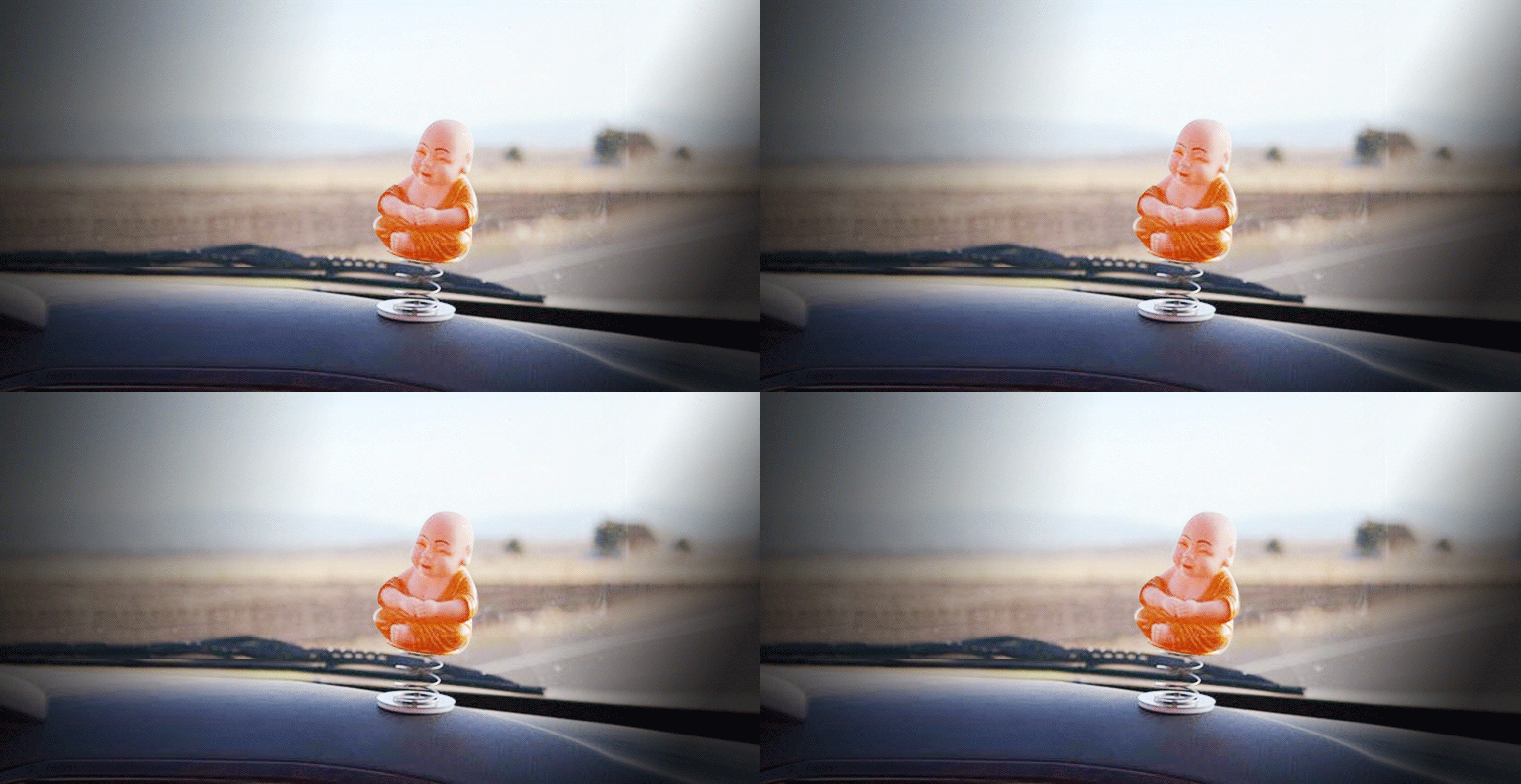
Actually, yes. I think so.
But that’s not all.
In my conversations a few more patterns stood out. Relationships emerged as a priority in almost every conversation. Highly rated drivers would talk about their family – how they are doing this for their son or their mom to have a better life . Or about how they are an extravert and love meeting new people.
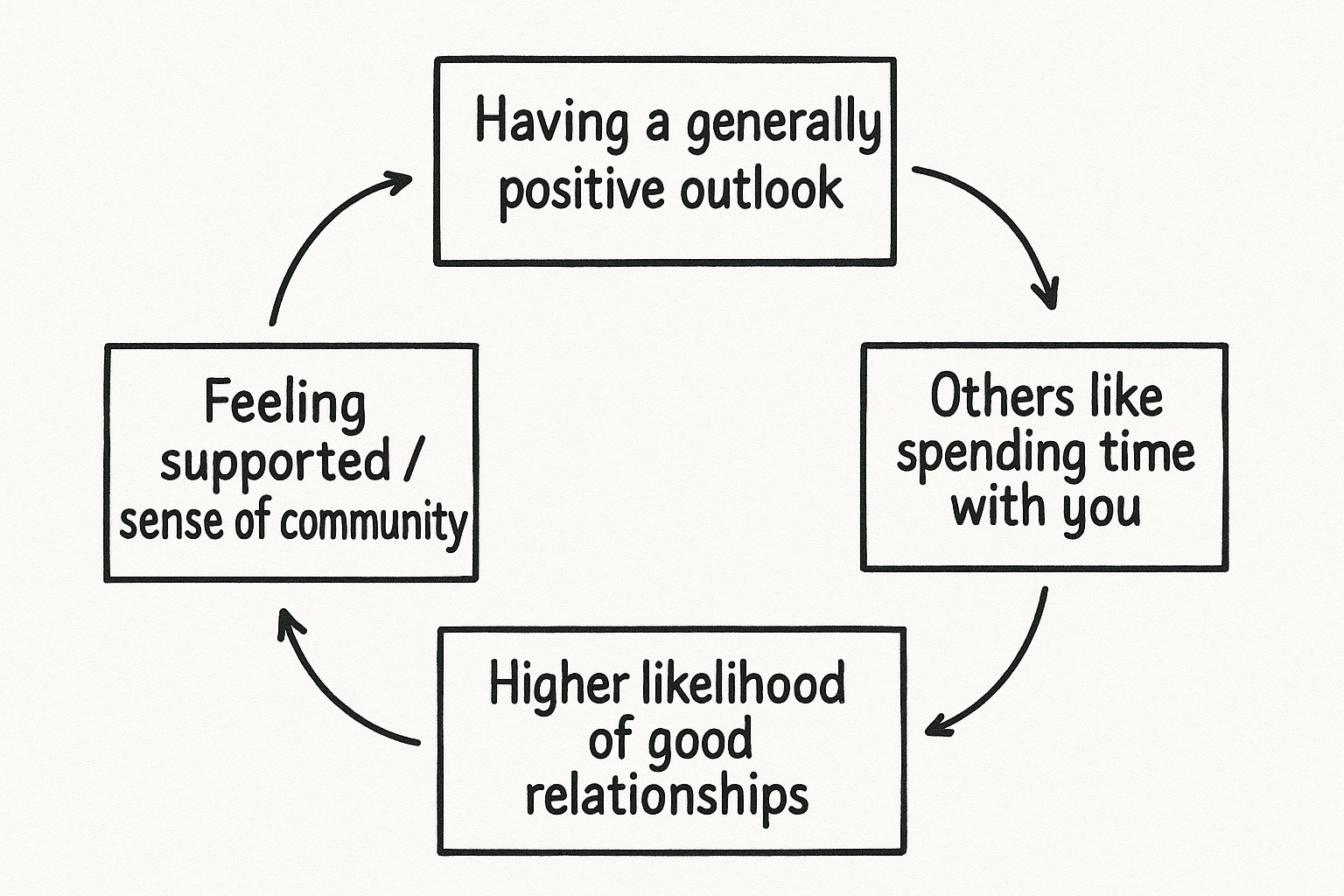
It made me realize there’s a virtuous cycle at play whereby having a positive outlook begets healthier relationships which creates a sense of community/support which makes it easier to have a positive outlook on things.
Having a sense of purpose showed up often too. Many said the job enabled them to have a life that mattered to them, or let them get the word out about a side project they were excited about.
Lastly, the lens of their attention was quick to turn from themselves to others. In our conversations, they quickly reverted to curiosity about me. What’s it like working for Uber? Where am I from? Do I get free rides?
If the root of unhappiness is an overwhelming sense that one’s problems are A Big Deal, then perhaps the antidote is to divert our attention toward others, to find others interesting. Because how better to lay bare the cosmic insignificance of our problems than by launching ourselves into the galaxy of others with a sense of awe and a smidge of curiosity?
This is so good. I did a LOT of Listen trips and the correlation between driver satisfaction and driver rating IS SOOOO clear.
This past weekend, a man knocked on my door asking for donations to a local Teen Challenge chapter. It happened to be during a heat advisory, and I ended up giving mostly because I felt for him—canvassing door-to-door in such oppressive weather couldn’t have been easy. When I mentioned the tough conditions, he just smiled and said, “It’s all part of it.” He shared briefly how thankful he was for the job and what the organization had done for him. Your observations in this article brought me back to that moment and how impressionable his positivity was during our short interaction.